Their Latin name is Grus japonensis and they are IUCN red-listed as Endangered with a wild population less than 2000 individuals and decreasing.
Pensthorpe have a special link with red-crowned cranes, and the International Crane Foundation (ICF) who work closely with local communities to raise awareness of the crane’s plight in East Asia, including the Demilitarized Zone of the Korean Peninsula. Alongside work in East Asia, zoological institutions such as Pensthorpe Conservation Trust maintain a healthy captive-bred population to ensure that the species has a safety net.
George Archibald, a valued Trustee of Pensthorpe Conservation Trust is co-founder of the ICF, back in 1973, based in Baraboo, Wisconsin, USA. During that first year, an elderly red-crowned crane named Phil arrived at Baraboo. The male we have here is Phil’s great-great grandson, hatched on 3rd May 2004. He came to Pensthorpe as a young bird and it seemed only right therefore that George Archibald give him a house name, George chose ‘Taro’ after a crane he once knew in Japan.
“Red-Crowned Cranes, in shining white with black trim, are poetry in motion when caught in dance or in flight against a blue sky.” George Archibald ICF.
In April 2020, whilst the Coronavirus lockdown continues owner of Pensthorpe, Deb Jordan, recorded our two Red-crowned cranes calling to each other and then the female tending to their nest, to sit on two eggs. It is fascinating to watch their behaviour and listen to them calling which conjures up images of what we would imagine to have been a common sound in the jurassic era.
July seems to have whizzed by, with heatwaves & heavy rain all added in. A big focus during the summer months is controlling invasive & dominant plants & our amazing volunteer team, with help from two Corporate Teams, have been hard at work with removal. Himalayan Balsam and Monkey Flower are two invasive species, originally… Read more »
This month we have had scorching sunshine to heavy thunderstorms, more the first than the latter. In this hot weather the insect population is thriving, especially for Aphids and Flies. Swallows are nesting and feeding their chicks on all these flying invertebrates, look in the hides to see their nests, but please be careful not… Read more »
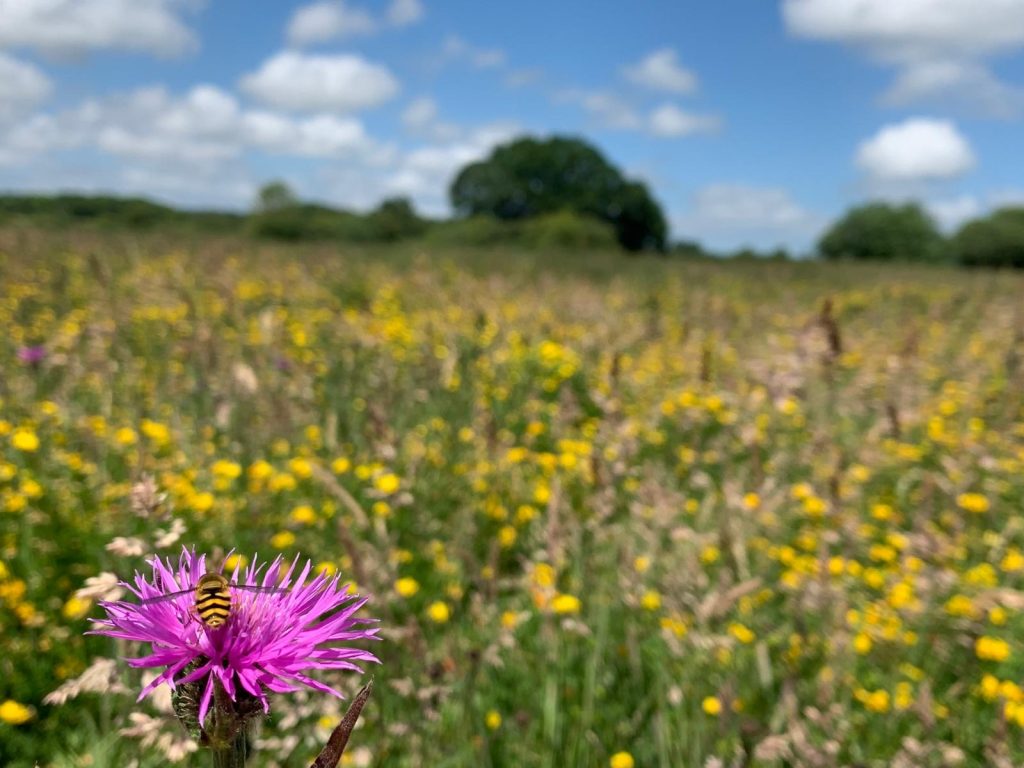
If you go down to the Wildflower Meadow you should see the work of the Reserve volunteers and staff. Over the last few weeks, the team has worked hard replacing two long sections of boardwalk, including supporting timbers and tread boards. The boardwalk is a definite place to visit and the perfect platform to observe… Read more »