From historic use as livestock barriers, to becoming wildlife corridors, hedgerows are important features in the farmed landscape, including here at Pensthorpe, where over three miles of hedgerows criss-cross the site.
In the one thousand plus years that hedgerows have been a part of the British countryside, wildlife has utilised them and they have become key habitats.
These linear features are important for connectivity of other habitats and over time at we have been linking between existing woodlands. Bats, for example, use hedges as “highways” as well as to hunt over.
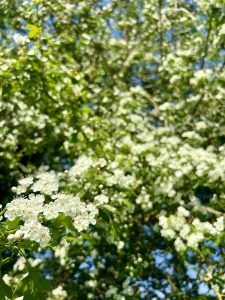
In spring, the blossom from Hawthorn and Blackthorn is a source of nectar for many invertebrates. Come autumn and winter, the berries are an important food supply for birds and mammals.
Dense foliage provides cover for nesting birds and those sheltering from predators or harsh weather. Not just the hedge plants themselves, but the vegetation below and adjacent provides shelter and at Pensthorpe grass & wildflower strips are left along hedges.
Over the past two years on site, around 500 metres of hedgerow have been planted and another 250m planned for this coming winter. All of the hedge plants are sourced locally, and the species are a native mix, predominantly Hawthorn, with Hazel, Dog Rose, Blackthorn and Field Maple. Three small Oak trees were transplanted from a meadow last winter and were added to the hedgerow to provide taller trees.
Hedges are trimmed on rotation to promote thicker growth; the optimal growth being 3m x 3m. These dense stands are used by nesting Yellowhammer, Lesser Whitethroat and Greenfinch.
Over the last 50 years, over 1/2 of all hedges in the UK have been lost. This is where you come in. Hedges can be a great addition to a garden, even if it is a few hedge plants. They provide food and shelter to wildlife, add wind protection as well as some privacy.