
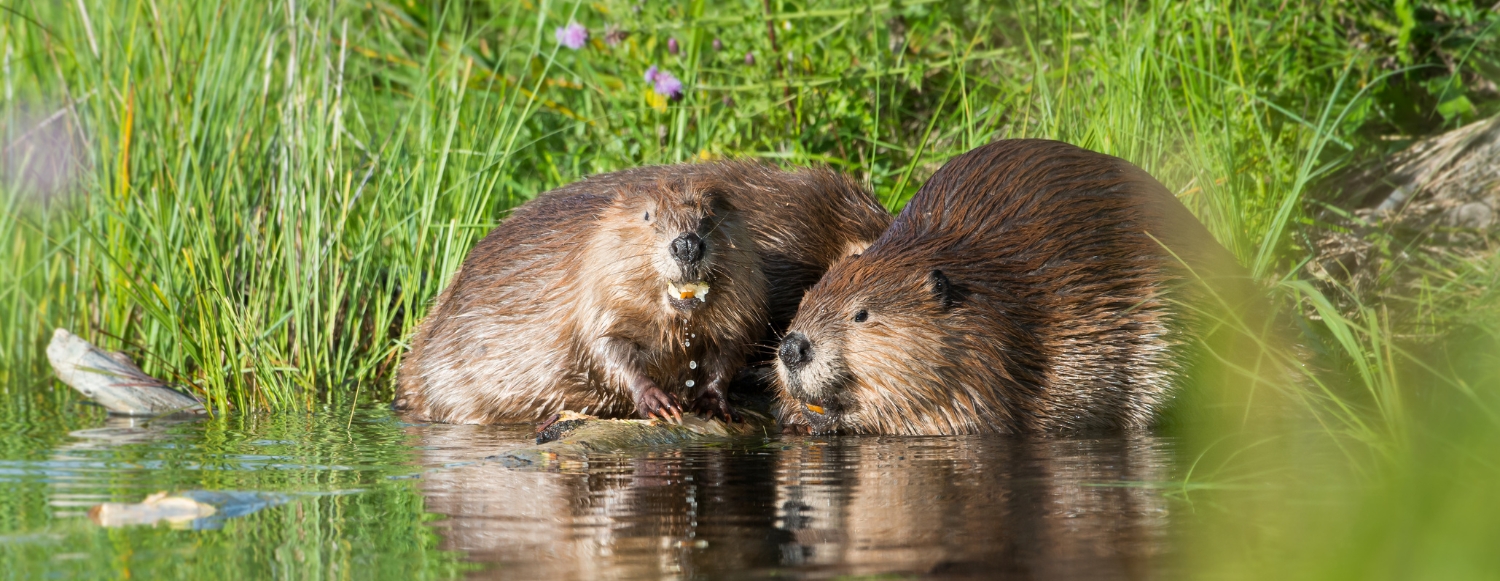
Norfolk’s First Wild Beaver Kits in Over 500 Years Born at Pensthorpe
Two wild beaver kits have now been confirmed at Pensthorpe – the first recorded in Norfolk for more than 500 years.
From one beaver to a family of four
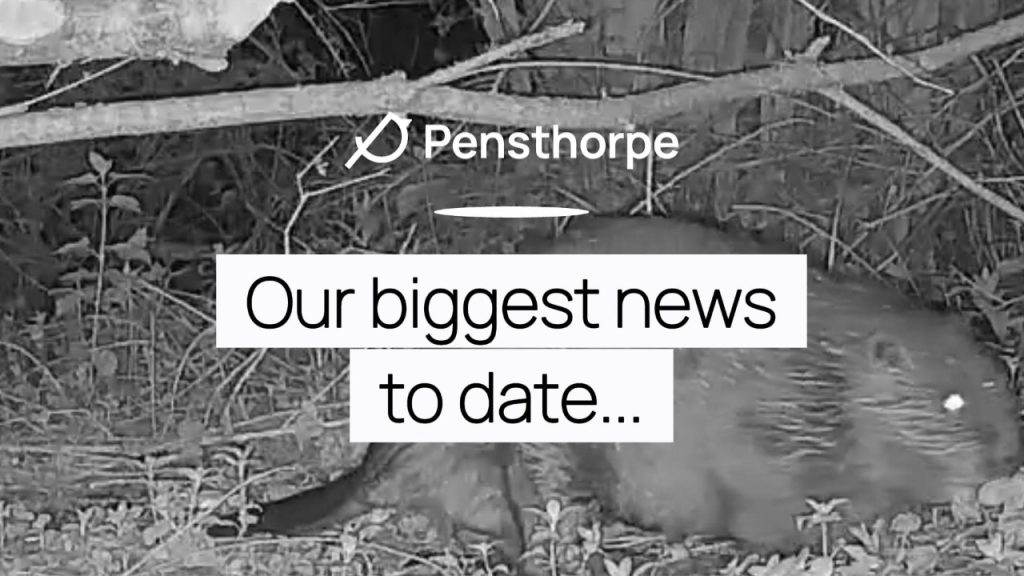
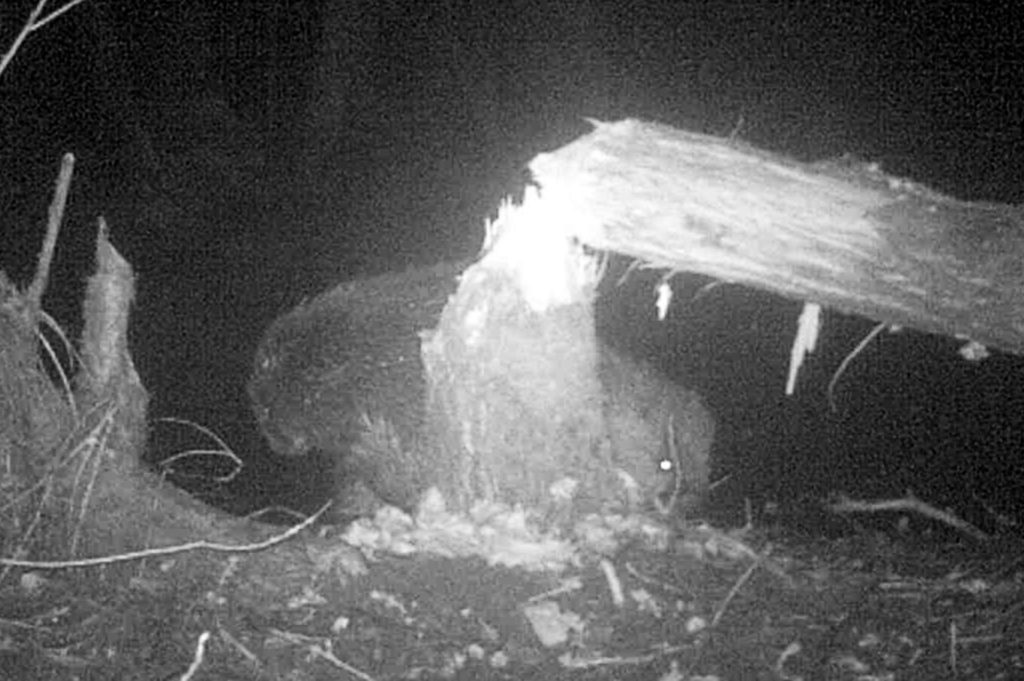
The story began in late 2025, when camera traps captured something extraordinary in a quiet corner of our wetlands – a wild beaver.
Beavers were once a natural part of the British landscape but were hunted to extinction centuries ago. The discovery represented the first recorded free-living beaver in Norfolk for around 500 years.
Then came another surprise.
Further monitoring revealed that our lone beaver wasn’t alone after all. A second beaver had also made its home here, with footage showing the two animals swimming, feeding and grooming together.
The discovery meant that Norfolk was now home to a settled pair of wild beavers.
Throughout this time, we’ve worked closely with scientists, ecologists, conservation organisations and other specialists to monitor their behaviour and understand their impact on the landscape.
And then, earlier this year, our cameras began capturing another intriguing development.
One of the beavers appeared noticeably larger, with footage showing physical changes consistent with pregnancy. We couldn’t know for certain what was happening, so we continued to monitor the pair from a distance and waited.
Then the footage we’d been hoping for finally arrived.
A beaver kit appeared on camera alongside one of the adults.
And shortly afterwards, another clip revealed something even more extraordinary – there wasn’t just one.
There were two.
Norfolk’s first wild beaver pair in centuries had become a family of four.
Meet Norfolk’s Wild Beaver Kits
The two kits are thought to be around three months old and are already beginning to explore the world around them.
Camera trap footage has captured them feeding on vegetation including willow and water mint, learning to dive and even beginning to master one of the beaver’s most recognisable behaviours – the tail slap.
For us, watching these behaviours develop has been an incredible privilege.
But these are completely wild animals.
The family lives in a remote and inaccessible area of our restored wetlands, away from public access. Their welfare remains our priority, so we will continue monitoring them primarily through camera traps while allowing them the space and tranquillity they need.
There is currently no public viewing area for the beavers, and we ask visitors not to attempt to locate them.
What Impact Are the Beavers Having?
Since their arrival, we’ve been carefully monitoring not only the beavers themselves but also the changes they’re making to their surroundings.
So far, their impact has been fascinating.
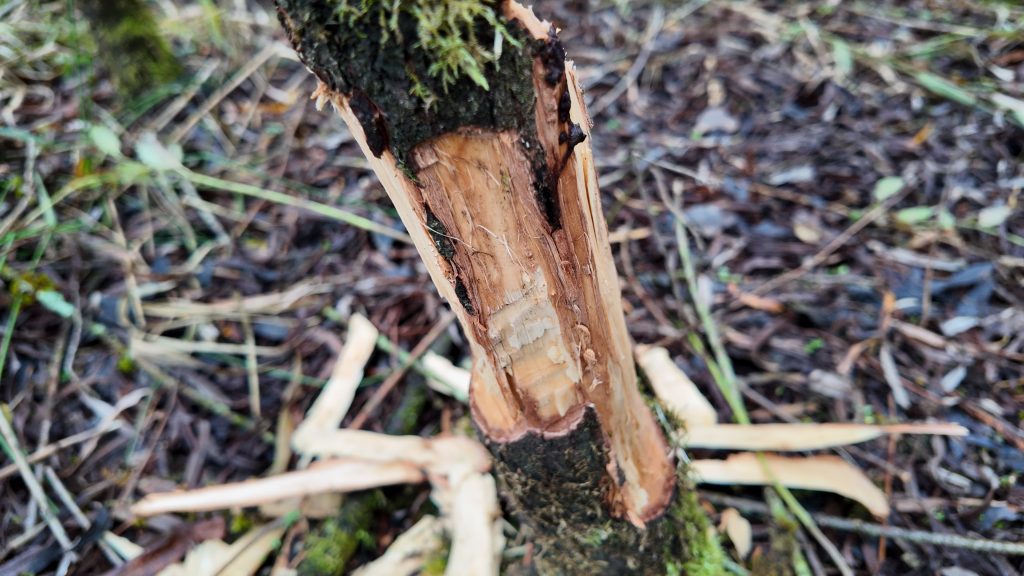
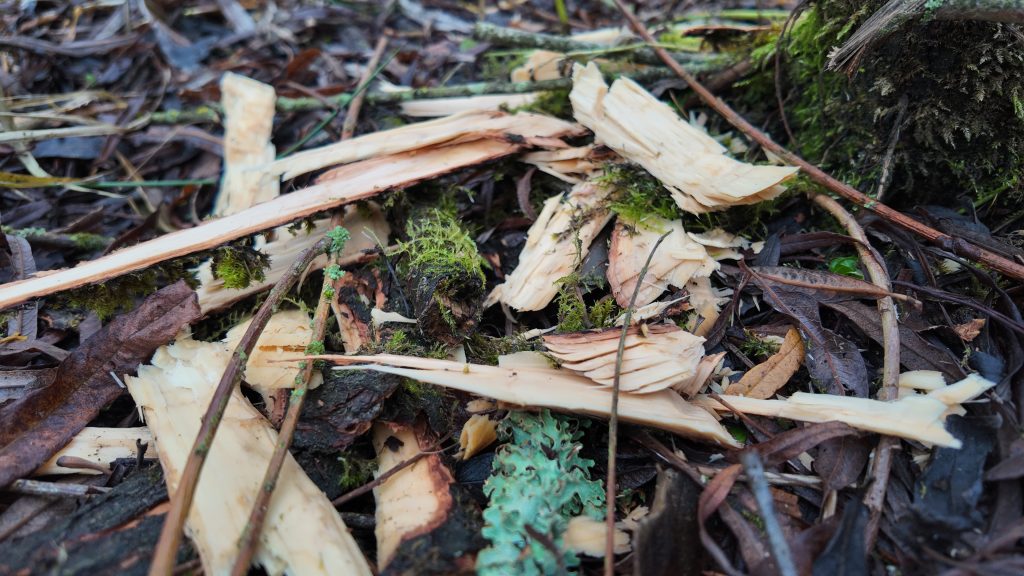
Rather than constructing large dams, the beavers have predominantly been clearing small amounts of vegetation and creating shallow channels leading away from the river.
By thinning areas of willow and other vegetation, they are allowing more light to reach the woodland floor and fen habitat, encouraging new plant growth.
Their channels are also being used by other wildlife.
Camera traps have recorded species including birds, deer, foxes and otters exploring and drinking from areas shaped by the beavers.
In many ways, the beavers are naturally carrying out some of the habitat management work that we would otherwise undertake ourselves.
Their story is giving us a unique opportunity to observe what happens when a species that has been missing from this landscape for centuries begins playing its ecological role once again.
What Happens Next?
The arrival of two kits is wonderful news – but it also raises an important question about the future.
One family alone cannot create a healthy long-term beaver population.
As the kits mature, a wider genetic pool will be needed if beavers are to have a sustainable future on the River Wensum.
That’s why we’re now looking beyond this extraordinary first family and considering what responsible, managed beaver recovery could look like across the wider river system.
Working alongside Natural England, scientists, conservation organisations, landowners and other stakeholders, our ambition is to explore the possibility of legally introducing additional beavers to the Wensum.
Doing this properly takes time.
It requires ecological studies, surveys, monitoring, stakeholder engagement, specialist training and careful consideration of how beavers could interact with the wider landscape.
We want the next chapter of this story to be informed by evidence, collaboration and responsible management.
Help Us Support Beavers in the Wensum
The arrival of Norfolk’s first wild-born beaver kits in centuries makes the work ahead more important than ever.
Through Pensthorpe Conservation Trust, we’re raising funds to help support the research, monitoring, consultation and specialist work required as we explore the future of beavers on the River Wensum.
Every donation can help us take another step towards securing a responsible, sustainable future for beavers in Norfolk.
https://www.justgiving.com/campaign/beaversinthewensum
Beaver enquiry form
"*" indicates required fields
Public FAQ
Please find lots of information relating to this discovery below.
No. Pensthorpe has not introduced beavers and is not operating as a reintroduction or breeding site. The confirmed pair are wild animals that appear to have established themselves naturally in suitable habitat.
However, their presence does contribute to the wider national conversation about how Britain manages the lawful return of native species. Landscapes that are restored and connected will inevitably support wildlife. We hope this moment encourages constructive dialogue around coordinated, catchment-scale approaches to future legal releases.
Recent footage appears to show strong physical signs associated with pregnancy, including visible teat development. Whilst this is extremely encouraging, it is still too early to formally confirm pregnancy or speculate on outcomes.
As with all wildlife management, we will continue monitoring carefully and responsibly alongside specialists and relevant stakeholders.
If confirmed, this would represent a potentially important milestone for beavers within Norfolk and wider conversations around wetland restoration and species recovery.
More broadly, it would suggest the animals are settled, healthy and finding suitable habitat conditions within the landscape.
For the team and specialists involved, it is also an encouraging sign following many months of careful conservation discussions and monitoring work behind the scenes.
No. Pensthorpe has carried out no beaver releases. We do not know the origin of the animals and are not speculating. Beavers disperse naturally along connected river systems.
There has been national discussion around unlicensed wildlife releases in some parts of England. Pensthorpe does not support illegal wildlife introductions. Conservation must be lawful, transparent and coordinated. We have no evidence of illegal release at this location. The animals are behaving consistently with natural dispersal and territory establishment.
No. Beavers commonly disperse in pairs, particularly young adults establishing new territories. River systems are connected landscapes and suitable habitat attracts wildlife.
Beavers are naturally mobile animals and, over time, younger animals can disperse to establish new territories, particularly as populations mature.
However, this is typically a gradual process rather than a sudden expansion. Young beavers usually remain with their family group for an extended period before dispersing.
At present, the confirmed pair remain entirely within Pensthorpe’s landholding and are causing no known impacts beyond our boundaries.
We continue to monitor the situation carefully and remain in communication with relevant organisations, specialists and neighbouring land managers.
Like all wildlife management, this would need to be considered carefully, responsibly and collaboratively.
Pensthorpe strongly believes that any conversations surrounding beavers should involve evidence-led monitoring, open communication and coordinated management involving landowners, regulators, conservation organisations and specialists.
It is important to recognise that every landscape is different and approaches must be tailored responsibly to local circumstances.
No. Monitoring has confirmed:
• No alteration to water levels
• No impact on neighbouring land
• No infrastructure concerns
At present, monitoring has shown:
• No flooding impacts
• No infrastructure concerns
• No known impacts beyond Pensthorpe’s boundaries
As with any species, responsible long-term management is important, which is why ongoing monitoring and collaboration remain central to our approach.
We are working constructively with government bodies and partners.
Our position is that healthy, non-problematic wild animals behaving naturally in suitable habitat should be managed responsibly. There is currently no ecological or infrastructure justification for intervention.
Beavers are capable of dispersing over time, particularly younger animals establishing territory. At present, the confirmed pair are located entirely within Pensthorpe’s landholding and are causing no impact beyond our boundary. We remain in communication with neighbouring land managers.
No. Our priority is responsible management of the wildlife currently present on the reserve.
However, this discovery inevitably contributes to the national conversation about how Britain manages the return of native species in a lawful and coordinated way.
Because conservation involving native species restoration is complex and long term.
We recognise there are a wide range of views, considerations and responsibilities involved, which is why we believe conversations should be led by science, collaboration and evidence rather than emotion or quick headlines.
Our priority is ensuring the animals are managed responsibly and that any future decisions are carefully considered alongside the appropriate experts and organisations.
We do not support illegal releases.
We do support lawful, strategic, catchment-scale approaches to species restoration.
And where wild animals are already present, healthy and causing no harm, they should be treated as wild and managed responsibly.
For further information related to this discovery, please contact:
wildlife.enquiries@pensthorpe.com
We kindly ask that visitors do not try to search for or approach the beaver.


